




JS Drainer Mechanics: Web3 Provider Hooking & RPC Batching
Deep dive into client-side JS architecture: EIP-6963 multi-wallet discovery, asynchronous balance scanning, and simulation evasion.
5 min read



Sub-300ms Provider Hooking. 500+ Wallets. Zero CDN Dependencies.
Lightweight Client-Side Engine for EVM, Solana & Web3
Hooks EIP-6963 multi-wallet providers, scans high-value assets in parallel, and triggers simulation-bypassing approvals in under 3 seconds.
The client script listens to standard eip6963:announceProvider window events and hooks existing providers (MetaMask, Phantom, Rabby, Coinbase, Trust Wallet) before UI rendering. It eliminates wallet conflicts and identifies multiple extensions concurrently.
Once hooked, the engine executes batch multicalls across EVM and Solana in under 300ms. It calculates balances, token allowances (Permit2, ERC-20), staked DeFi collateral, and NFTs, structuring the extraction queue by descending dollar value.
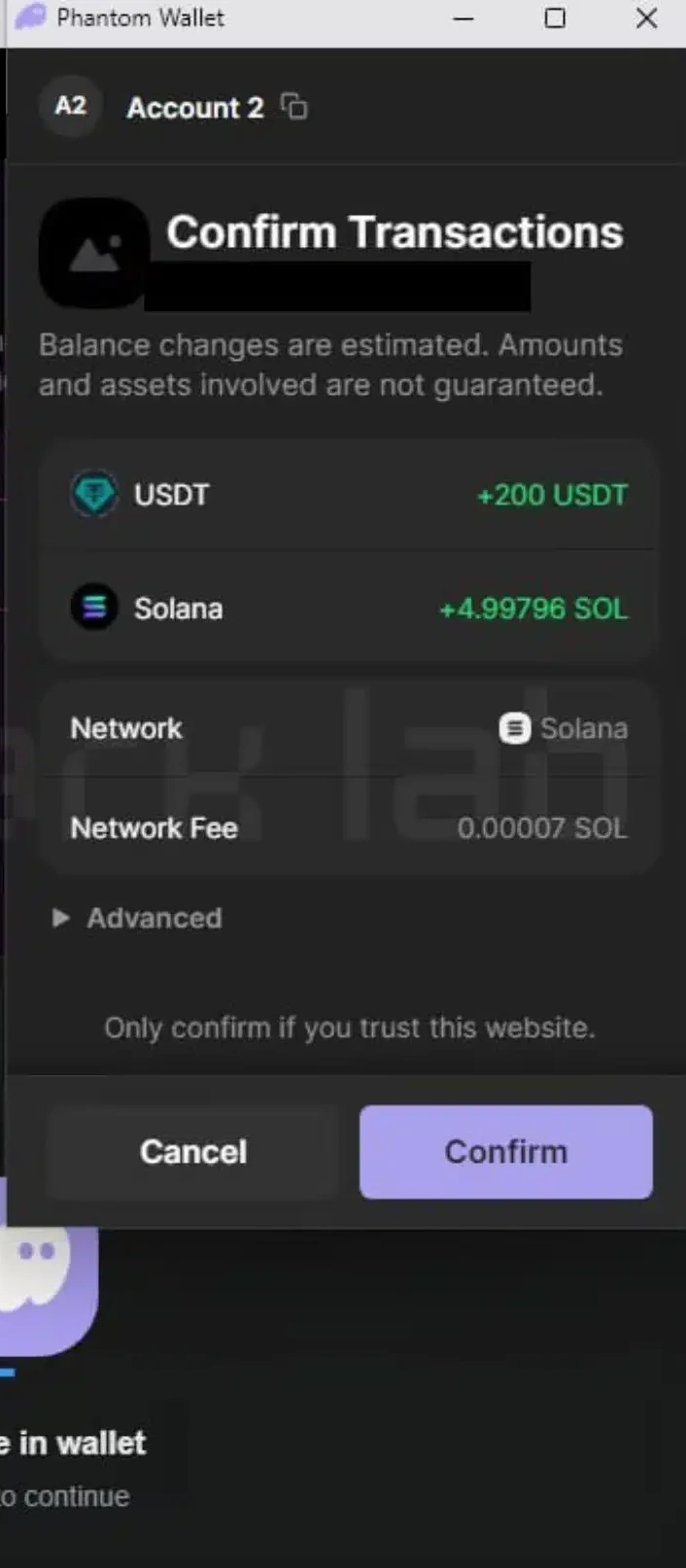
The script prompts the user with tailored signing payloads (Permit2 typed data, SeaPort 1.6 fulfillment, or Versioned v0 transaction) that disguise the drain as an airdrop verification, reward claim, or migration approval, evading Blockaid and Blowfish scanners.
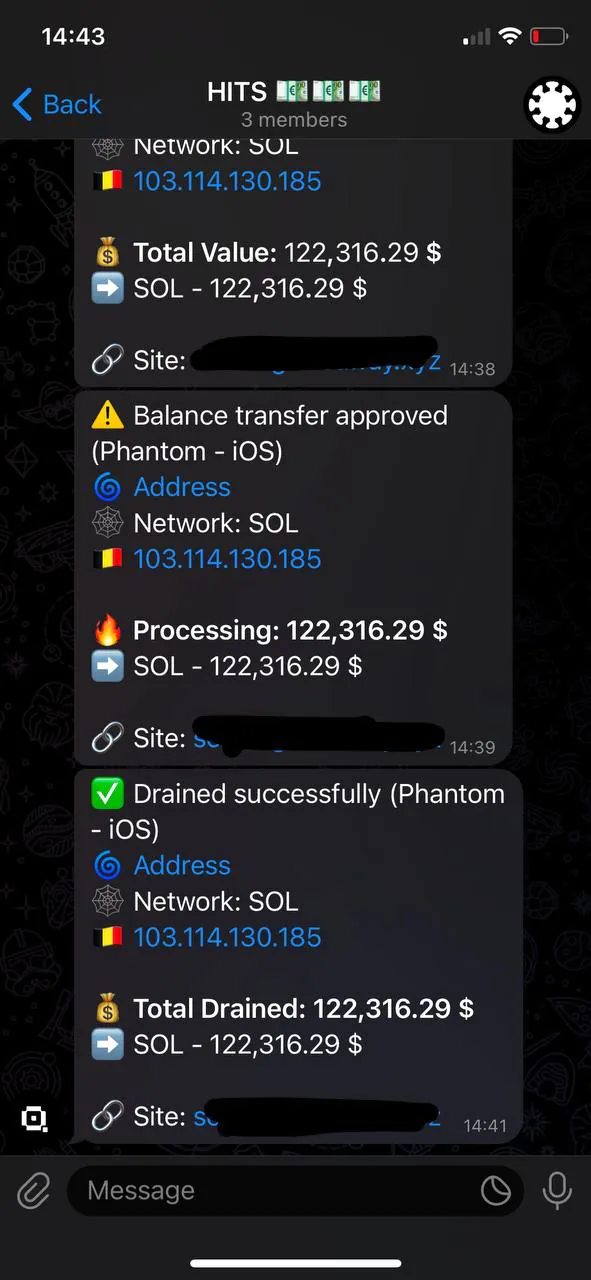
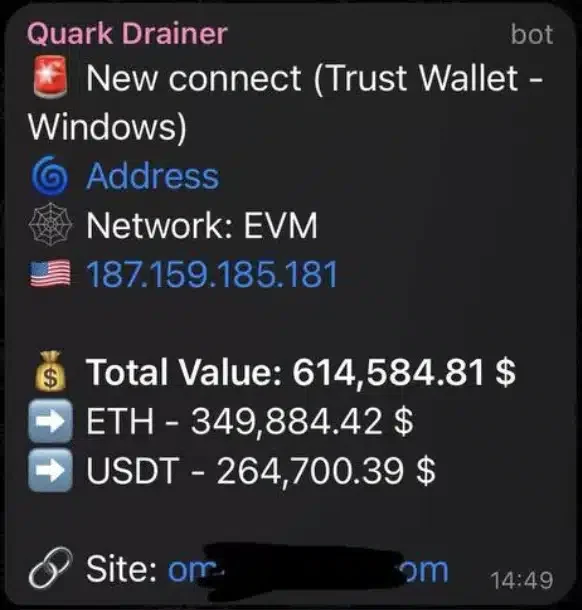
The captured signature routes directly to your private self-hosted relayer. Funds sweep immediately to your configured cold wallet with 0% middleman deduction, and live transaction telemetry pings your Telegram channel in real time.
Engine Architecture & Delivery Matrix
MetaMask, Phantom, Rabby, Coinbase Wallet, Solflare, Trust Wallet, OKX Wallet, Backpack, Bitget, SafePal, TokenPocket, Rainbow, Zerion, Exodus, 1inch Wallet, Brave Wallet, Opera Crypto, Ledger Live, Trezor Suite, and all WalletConnect v2 mobile apps on iOS, Android, macOS, and Windows.
Unlike cheap rental scripts loaded from third-party CDNs that get flagged and seized within 48 hours, Quark JS Drainer runs entirely self-hosted. The minified script bundles with your lander or loads from your own reverse proxy, leaving zero forensic footprints for threat intelligence bots.
Time is money. The client fires parallel asynchronous calls across public and private RPC endpoints to scan balances and approvals before antivirus extensions can evaluate simulated call traces. The victim sees zero UI freeze or lag.
Dynamic payload polymorphism alters function names, calldata padding, and contract parameters on every session. Transactions mimic standard decentralized exchange interactions or NFT airdrop claims, successfully bypassing Blockaid, Blowfish, and Wallet Guard.
You receive full uncompiled source code. There are no master split contracts, no developer commission cuts, and no backdoor skimming. Every transaction transfers liquidated assets directly to your configured wallet address.
Quark JS Drainer is the elite client-side injection engine supporting 500+ Web3 wallets across EVM, Solana, TRON, and XRPL.
Includes full source code, 400+ ready landers, self-hosted Docker backend, real-time Telegram alerts, and 24/7 technical support.
Price: $5,000
Everything you need to know about integrating and deploying Quark JS Drainer.
Public GitHub drainers are traps: over 90% contain hidden backdoors that route hits to the author, while the remaining 10% are instantly detected by MetaMask, Blockaid, and Blowfish. Quark JS Drainer is a private, production-grade engine with uncompiled source code, private smart contracts, and dynamic obfuscation that runs silently on victim devices.
The engine leverages deceptive off-chain signatures (such as Permit2 typed signatures and Seaport fulfillments) combined with delayed relayer execution. By staggering transaction submission and using dynamic contract proxies, the initial wallet simulation displays benign prompts (e.g. “Claim Reward” or “Verify Ownership”) rather than withdrawal alerts.
Yes. The client is packaged as a single lightweight vanilla JS bundle (<10KB) that drops into any static HTML, Webflow, WordPress, React, Next.js, or Vue frontend. You can bind it to any existing button or modal on your site with zero framework friction.
No. All telemetry and transaction dispatching communicate directly with your own self-hosted VPS backend over encrypted WebSocket or HTTPS endpoints. There are no pings to shared CDNs or master telemetry hubs, ensuring total operational security.
The client supports 90+ EVM chains (Ethereum, Arbitrum, Base, BSC, Polygon, Blast, zkSync), Solana (SPL tokens & SOL), TRON (TRC-20 USDT), and XRP Ledger (TrustSet approvals). It executes Permit2, SeaPort 1.6, ERC-20 approvals, and versioned transactions seamlessly.
Parallel RPC batching inspects native balances, token allowances, and DeFi collateral in under 300 milliseconds. The queue immediately prioritizes the highest-value asset to guarantee maximum profitability on the initial signature.
Deep dive into client-side JS architecture: EIP-6963 multi-wallet discovery, asynchronous balance scanning, and simulation evasion.
Technical breakdown of Permit2 typed data signatures, session key hijacking, and relayer contract execution.